Advertisement · Sponsored Editorial Content

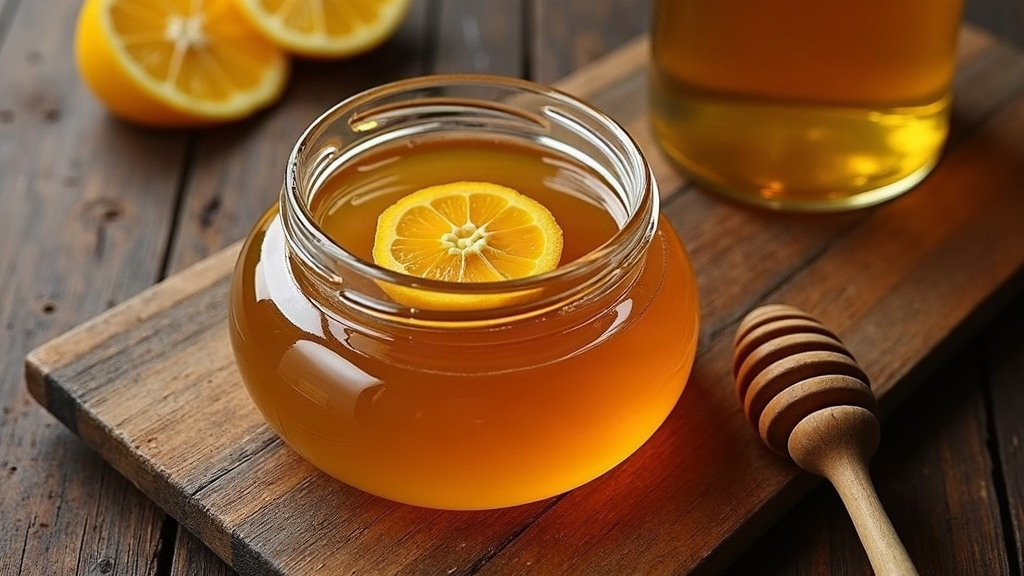
What Does Honey Have To Do With How Sharp Your Mind Feels After 50?

Before you dismiss honey as just a kitchen staple, consider what traditional use and modern curiosity have to say about it — and why so many people over 50 are taking a second look at this simple ingredient.

n
Educational content only  ·  No miracle claims — just information  ·  Rooted in tradition, examined with curiosity  ·  Always consult a healthcare professional

Why Memory Shifts After 50

Cognitive changes after 50 are common and rarely caused by a single factor. Here are four areas often discussed by researchers and clinicians when the topic comes up — including how something as ordinary as honey occasionally enters the conversation.

n

Slower Processing Speed

Many adults notice it simply takes a bit longer to recall a word or follow a fast-moving conversation. This is a widely documented part of typical aging.

Disrupted Sleep Patterns

Sleep quality tends to change with age, and researchers frequently note a connection between restorative sleep and how sharp the mind feels the next day.

Reduced Mental Energy

Sustained focus can feel harder to maintain later in the day, something many people attribute to shifts in overall energy levels rather than any single cause.

Information Overload

Constant notifications, news, and multitasking are frequently cited as contributors to the sense of mental clutter reported by adults over 50.

Myths vs Facts About Aging And Memory

There is a lot of noise around this topic. Here is a sober look at three common claims.

n
MYTH

Memory decline after 50 is entirely unavoidable and fixed.

n
FACT

Everyday habits — including sleep, nutrition, and stress management — are widely studied for their possible role in overall brain wellness, though individual outcomes vary.

n
MYTH

Only pharmaceutical products are worth discussing when it comes to brain health.

n
FACT

Lifestyle factors such as diet, movement, and mental engagement are commonly discussed alongside medical guidance in general wellness conversations.

n
MYTH

Natural ingredients like honey have no place in a modern, evidence-based routine.

n
FACT

Honey has a long history of traditional use across cultures and continues to be studied for its natural composition, though it is not positioned as a treatment for any condition.

n

A Simple, Three-Part Way To Think About It

This is not a clinical protocol. It’s a straightforward framework some people use to organize everyday habits.

n
01

Step 1: Understand The Basics

Start by learning what is actually known — and not known — about how everyday ingredients like honey have been traditionally used and studied.

n
02

Step 2: Build A Consistent Routine

Small, repeatable habits tend to matter more than occasional big changes. Consistency is a recurring theme in general wellness discussions.

n
03

Step 3: Track What Feels Sustainable

Pay attention to what fits realistically into daily life, and revisit the routine periodically rather than expecting a fixed outcome.

n

Where This Idea Comes From

Honey has been part of traditional practices for thousands of years, referenced in ancient texts from multiple cultures long before modern nutrition science existed. In recent decades, researchers have taken renewed interest in its natural composition, prompting broader curiosity about how such long-used ingredients fit into contemporary conversations about healthy aging.

n

Insight: Tradition alone does not replace clinical evidence, but it often points researchers toward questions worth exploring further — which is part of why interest in ingredients like honey persists today.

n

Signs Worth Paying Attention To

Frequently Losing Track Of Conversations

Struggling to follow along or repeatedly asking someone to restate what they said.

Difficulty Recalling Recent Names

Names of people met recently feel harder to retrieve than they used to.

Feeling Mentally Foggy By Midday

A sense of mental haze that seems to set in well before the day is over.

Misplacing Everyday Items More Often

Keys, glasses, or phones turning up in unusual places more frequently than before.

Trouble Concentrating On One Task

Finding it harder to stay focused on a single activity without the mind wandering.

Mental Fatigue After Light Activity

Feeling unusually drained after tasks that once required little mental effort.

What People Are Saying

I was skeptical at first, but learning about the traditional use of honey gave me a new perspective on my own daily habits.

Eleanor R.
Illustrative account
The information was presented clearly, without overpromising anything. I appreciated that it felt honest.
Walter D.
Illustrative account
It made me curious enough to do my own research and talk to my doctor about small changes to my routine.
Miriam T.
Illustrative account

Testimonials reflect individual opinions and personal experiences only. They are not a guarantee of any outcome, and results vary from person to person. These statements have not been evaluated by the FDA.

n

Frequently Asked Questions

No. This content is educational and does not diagnose, treat, cure, or prevent any condition. Always consult a licensed healthcare professional.

n

Honey has a long history of traditional use, and its natural composition has drawn interest from researchers, which is why it’s often referenced in general wellness conversations.

n

Anyone with an existing health condition should speak with their doctor before making changes to their routine or diet.

n

The presentation itself is free to watch. Any related product decisions are entirely optional and up to the viewer.

n

There is ongoing research into many natural ingredients, including honey, though findings should always be interpreted alongside professional medical guidance.

n

It’s designed primarily for adults over 50 who are curious about everyday habits related to general cognitive wellness.

n

Take time to reflect on the information, discuss it with your healthcare provider if relevant, and decide what, if anything, fits your personal routine.

n

Curious To Learn More?

Watch the free presentation to understand why honey has become part of the broader conversation around everyday routines for people over 50.

n

Advertising Disclosure: This is sponsored content created for advertising purposes. Links on this page may be affiliate links, meaning we may receive compensation if you make a purchase after clicking through, at no additional cost to you. This content is intended to inform and does not constitute a personal recommendation.

n

Content Disclaimer: This content is for educational and informational purposes only. It has not been evaluated by the Food and Drug Administration (FDA). Nothing on this page is intended to diagnose, treat, cure, or prevent any disease or medical condition. Always consult a qualified healthcare professional before making changes to your diet, supplement routine, or lifestyle.

n

Results Disclaimer: Individual results vary and are not guaranteed. Testimonials and experiences shared on this page reflect personal opinions and should not be interpreted as a promise or guarantee of any specific outcome for any user.

n

© 2026 · All Rights Reserved · Questions? Visit /contact/

n